As the trend toward larger wind turbines continues to accelerate, the capacity of single units keeps breaking records; currently, onshore units exceed 15 MW, while offshore units have reached over 25 MW. As the core component of a wind turbine’s drive-train, the main bearing faces increasingly demanding operating conditions. While striving for maximum power output, ensuring the long-term stable operation of the main bearing under complex loads has become a key indicator of the turbine’s overall reliability and directly determines the operational efficiency of wind farms.
A failure in the main bearings can trigger a chain reaction of losses. The direct economic loss for a single unit exceeds one million yuan, covering component replacement, repairs to the gearbox and generator, O&M labor and transportation costs, as well as lost power generation due to downtime. The resulting indirect economic losses, equipment safety hazards, and impacts on regional energy security far exceed the direct losses.
In response to the industry’s demand for ultra-high-reliability main bearings, HKW has introduced the three-row cylindrical roller bearing (3CRB). With its innovative decoupled structural design and exceptional performance, this product is bringing a revolutionary technological transformation to the wind power industry.
I. 3CRB Core Technology: Decoupled Structural Design
The 3CRB features a decoupled design comprising “one row of vertical radial rollers and two rows of horizontal axial rollers” which is at the heart of its technical breakthrough. The three rows of rollers have clearly defined functions and operate completely independently, achieving full decoupling of radial, axial, and overturning moment loads, thereby eliminating load superposition effects.
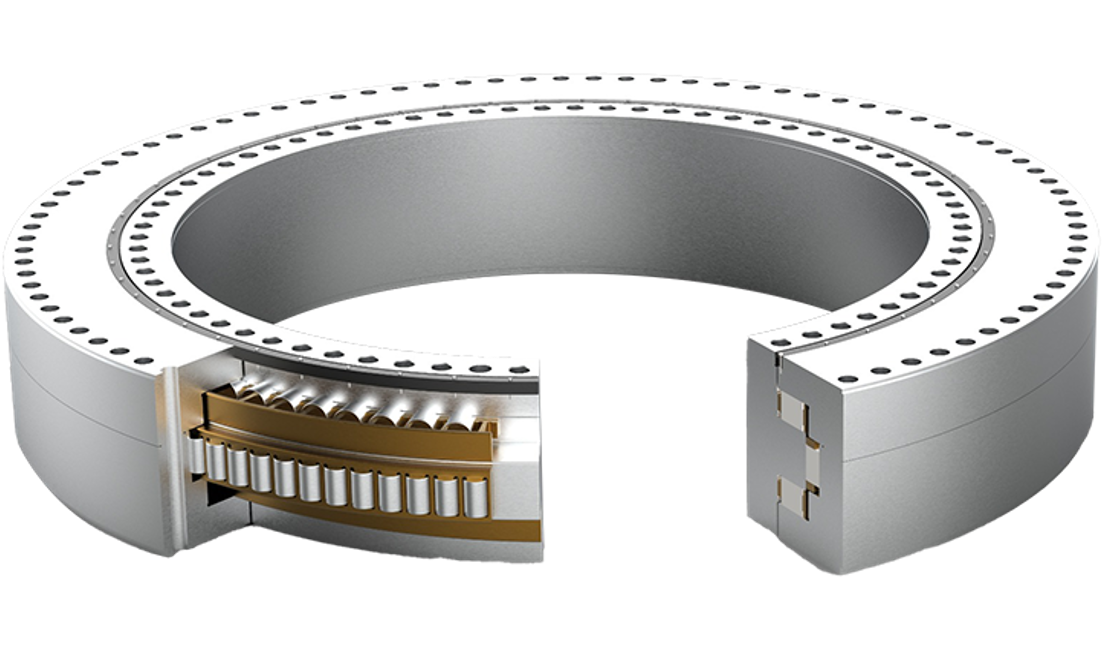
HKW 3CRB Main Bearing
This design ensures that contact stresses in the raceway remain under control throughout the entire operating cycle, completely eliminating the risk of failure due to uneven loading. It addresses, at the structural level, traditional challenges faced by wind turbine main bearings under complex wind loads, such as uneven loading of the raceway, excessive contact stresses, and fatigue spalling.
II. Advancements Across Six Key Dimensions: A Comprehensive Solution to Common Challenges
1. Challenges with Composite Loads---Fully Decoupled Load-Bearing
During fan operation, wind loads fluctuate rapidly; these complex combined loads can easily cause misalignment of the main bearing raceways and excessive contact stresses, which in turn can lead to fatigue spalling. By completely decoupling the radial, axial, and overturning moment loads, the 3CRB eliminates any load superposition effects, ensuring that contact stresses on the raceways remain consistently controllable. This completely mitigates the risk of failure caused by uneven loading, enabling the bearing to effortlessly handle the complex, heavy-load demands of large-megawatt wind turbines.
2. Challenges of Low-Temperature Shrinkage---Structural Innovation
If the main bearing and main shaft are assembled using an interference fit, metal contraction due to cold temperatures in extremely cold northern environments can easily lead to failure risks such as ring slippage and wear on the mating surfaces. The 3CRB features a spindle-less design, with its inner and outer rings rigidly connected to other components via high-strength bolts. This structural innovation not only simplifies the drive chain but also completely eliminates the risk of failure associated with interference fits at low temperatures. The 3CRB maintains stable performance across a wide temperature range of -40°C to +90°C, ensuring the year-round stable operation of wind farms in northern regions.
3. Installation Challenges---Factory-Set Clearances
Due to the complex installation conditions at fan sites, installation errors and improper preload adjustment are often the primary causes of main bearing failure during the early stages of operation. The 3CRB comes with pre-set clearance from the factory, allowing for installation without on-site adjustments to coaxiality or preload. It offers high tolerance for installation errors, effectively eliminating potential installation risks and significantly reducing both the difficulty and time required for on-site installation.
4. Challenges in Lubrication Failure ---Integrated Automatic Lubrication Systems
In cold winter conditions, grease is prone to excessive viscosity and poor flowability, which can lead to lubrication failure in main bearings. This issue is particularly severe in high-altitude and northern wind farms. The 3CRB is equipped with an integrated automatic lubrication system; its oil passage design is tailored to the independent lubrication requirements of three rows of rollers. Combined with wide-temperature synthetic lubricating oil, it ensures effective oil supply across the entire contact area even at low temperatures, guaranteeing the normal operation of wind turbines under extreme weather conditions.
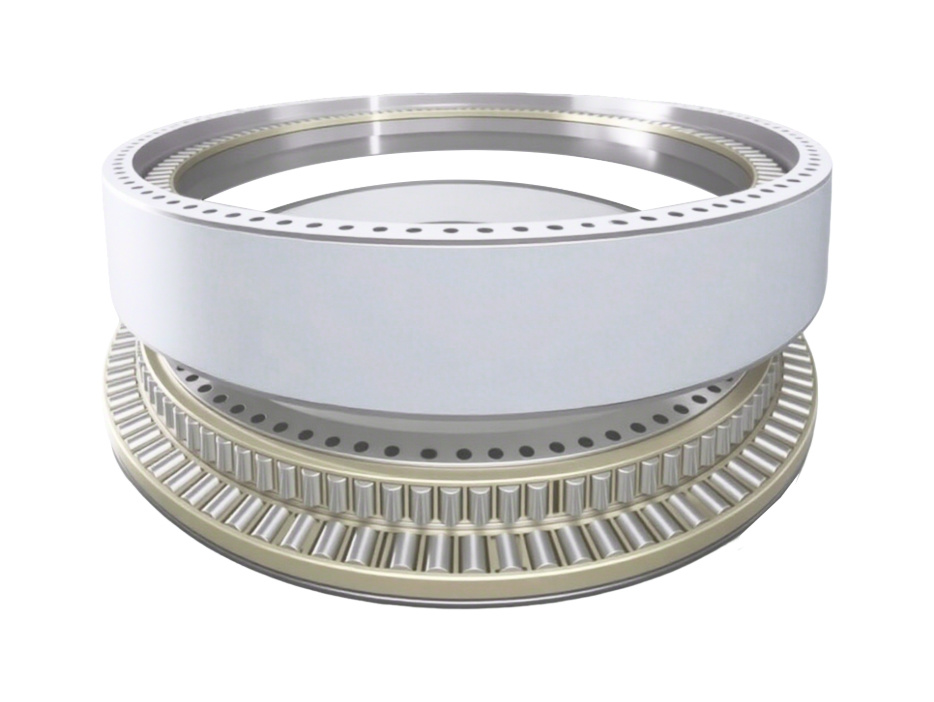
HKW 3CRB Main Bearing
5.The Challenge of Inadequate Operations and Maintenance: Comprehensive Status Monitoring
Wind farms are widely distributed, and the absence of maintenance personnel during holidays can easily lead to the irreversible progression of micro-damage in main bearings. The 3CRB integrates comprehensive condition monitoring sensors that enable remote, real-time monitoring of vibration, temperature, and lubricant quality. It provides early warnings of potential issues, prevents rapid deterioration of micro-damage, enables predictive maintenance, and reduces unplanned downtime.
6. Challenges with Seal Failure—Integrated Multi-Layer Seals
In offshore wind farms, salt spray corrosion and sand and dust intrusion in northern regions can cause main bearing seals to fail, allowing water ingress that leads to grease emulsification and raceway corrosion. The 3CRB features an integrated multi-lip seal design optimized for high circumferential speeds at large diameters. Models designed for offshore and northern low-temperature environments are equipped with heating, dehumidification, and drain hole structures, achieving an IP66 or higher protection rating to effectively withstand harsh environmental conditions.
III. Two-Factor Authentication: Setting the Industry Standard for Reliability
Building on a century of expertise in materials science and the continuous refinement of heat treatment processes, the exceptional reliability of the HKW 3CRB has been rigorously tested under both “extreme laboratory conditions” and “harsh real-world operating conditions.”
Authoritative Laboratory Certification: In leading German laboratories, the 3CRB has set new industry records for key performance metrics such as deformation control, load limits, and fatigue life, making it ideally suited for the long-term, heavy-duty demands of large wind turbines rated at 5 MW and above.
Proven in the Field with Zero Failures: Long-term operational data from European offshore wind projects confirms that even in extreme marine environments characterized by severe impact loads and high salt fog corrosion, 3CRB maintains rock-solid performance, setting an outstanding record with zero batch failures.
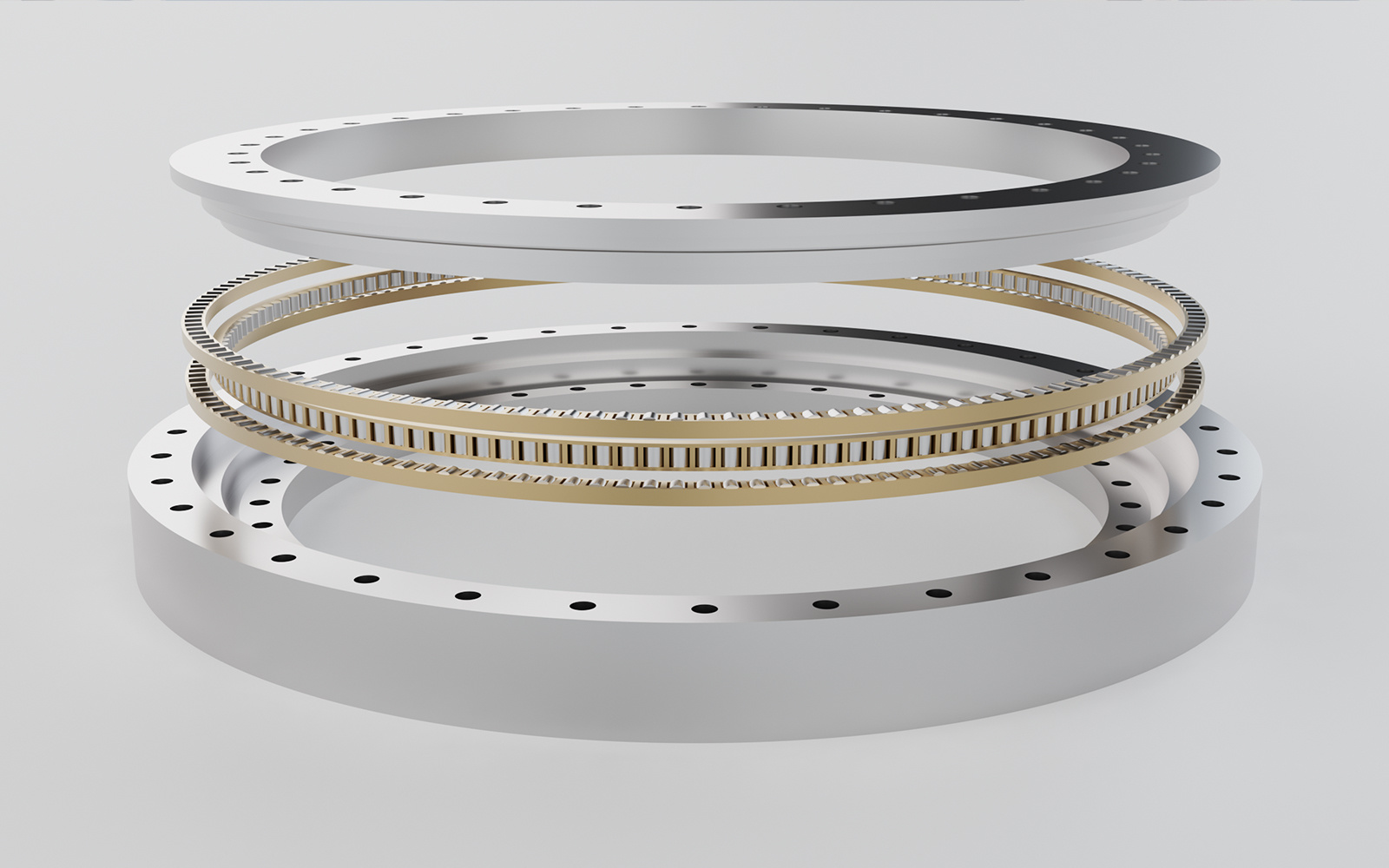
HKW 3CRB Main Bearing
IV. Adapting to Both Land and Sea Environments to Redefine Economic Value
From the sand and wind of onshore wind farms and extreme temperature fluctuations to the salt spray and raging waves of offshore wind farms, the HKW 3CRB demonstrates exceptional adaptability across all operating conditions.
Maximizing Cost Savings and Efficiency: Significantly reduce unplanned downtime and frequent maintenance costs for wind turbines, while substantially improving power generation availability.
Full Life-Cycle Compatibility: With a design service life exceeding 20 years, it is perfectly aligned with the full life-cycle design requirements of wind turbines, truly delivering “install once, enjoy long-term peace of mind.”
V. Vision and Outlook: Aligning Technology and Benefits
In future, HKW will continue to expand its global network of localized services, combining a century of German engineering expertise with cutting-edge innovation to deliver products that exceed our global partners’ expectations. We are committed to aligning technological advancements in green energy with the commercial success of industry participants, working together to build a new, more efficient, and more reliable ecosystem for the wind power industry.