On June 25, India’s Ministry of New and Renewable Energy (MNRE) issued an official office memorandum introducing two key amendments to the prototype wind turbine installation guidelines originally released in 2025. The updated provisions take effect immediately across India’s wind energy sector.
The revisions target two core areas: commercial utilisation of power generated by prototype turbines and the approval process for prototype installation.
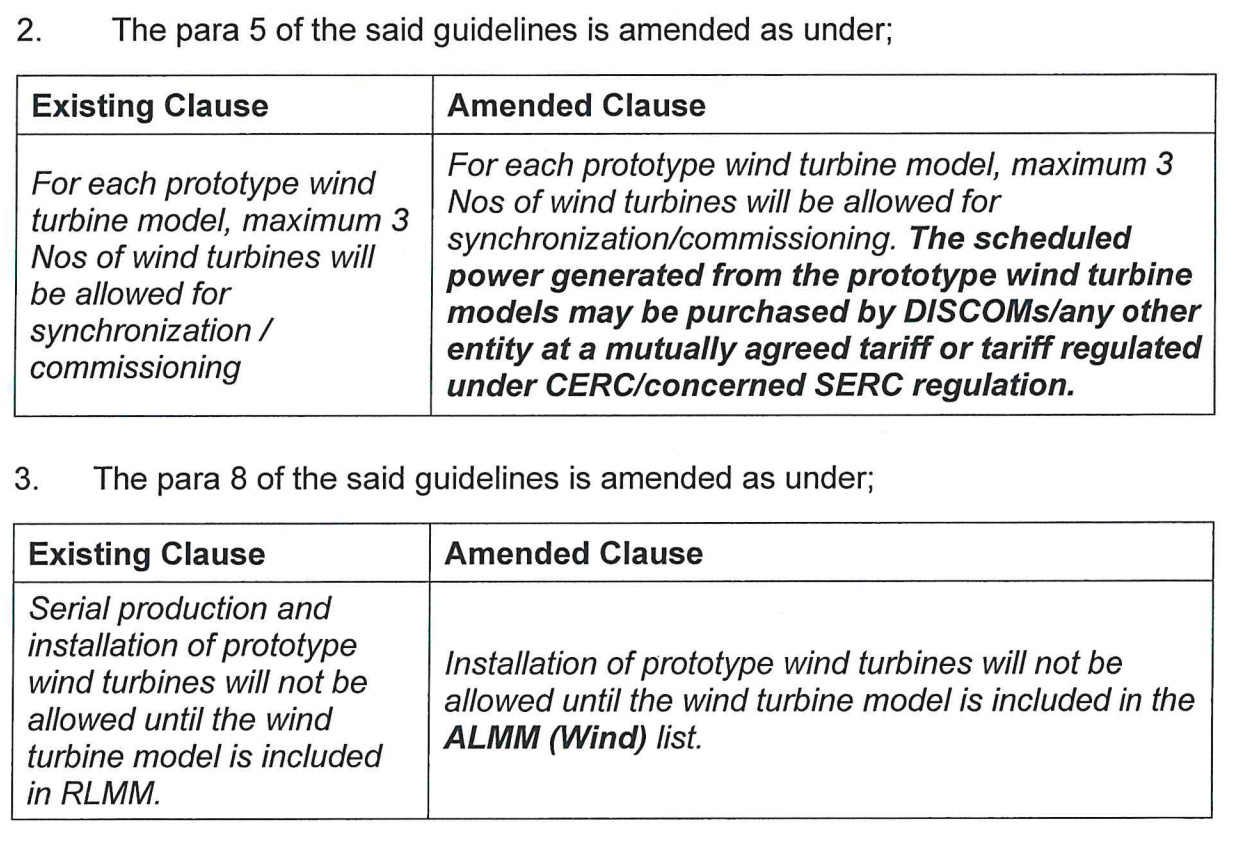
First, new rules govern electricity output from wind turbine prototypes. The earlier policy capped installations at three prototypes per turbine model, which could only operate for grid synchronization and commissioning tests. The revised framework lifts this restriction, allowing power produced by prototypes to be traded commercially in the power market.
This change enables turbine OEMs to generate operating revenue during prototype testing, offsetting substantial R&D expenditure on new technologies and accelerating field validation and technical upgrades for high-capacity large-megawatt wind turbines.
Second, the government has tightened the preconditions for prototype installation approvals. Under the previous guidelines, mass production and installation were permitted once a turbine model was listed on the Revised List of Models and Manufacturers (RLMM). The updated regulation shifts the qualifying roster: prototype installation is only authorised after a turbine model secures entry to the Approved List of Models and Manufacturers (ALMM) for wind turbines.
The ALMM regime enforces far stricter compliance standards. Manufacturers are required to fully disclose suppliers of core components including blades, towers and main bearings, while also meeting mandatory local data storage requirements and establishing domestic R&D centres. The mechanism screens out models with substandard technology and supply chains at the initial stage, and compels both domestic and foreign wind turbine players to strengthen local supply chain setups in India.
All other clauses of the original June 2025 guidelines remain unchanged aside from these two core amendments.
The new regulations create divergent impacts for different turbine manufacturers.
Indian domestic OEMs such as Suzlan stand to benefit significantly. Revenue from selling prototype power cuts R&D costs and speeds up field trials for their in-house large-megawatt turbine models. Their well-established local supply chains also make it easier to satisfy ALMM component registration criteria, allowing them to outpace foreign competitors in technological iteration.
For overseas wind firms including GE Vernova and Chinese turbine manufacturers, compliance costs have risen. Gaining ALMM listing demands full disclosure of global supply chains alongside mandatory local data storage and domestic R&D facilities. Nevertheless, the ability to monetise prototype power offsets part of on-site testing expenses and lowers the trial-and-error costs of entering the Indian market.