Siemens Gamesa recently released its financial results for fiscal year 2024-2025 (ending September 30), reporting a full-year loss of €1.36 billion. The persistent losses have prompted some investors to call for an evaluation or even the sale of the business.
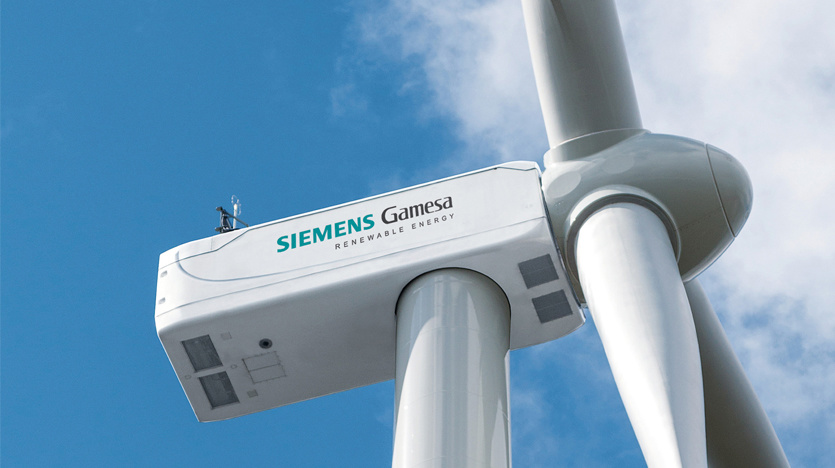
Siemens Gamesa (Image source: Siemens Gamesa official website)
Financial reports indicate that Siemens Gamesa recorded a loss of €1.36 billion for the 2024-2025 fiscal year, representing a €420 million reduction from the previous fiscal year's €1.78 billion loss—a decrease of 23.6%. Revenue grew against the trend by 3.7% to €10.3 billion.
The financial report clearly indicates that the core losses stem from three major pain points: low gross margins on onshore wind power contracts, high costs associated with offshore expansion, and the impact of U.S. tariffs on overseas operations.
Despite persistent losses prompting some investors to call for divestment, parent company Siemens Energy has taken a firm stance. CEO Christian Bruch openly stated he is “proud of the progress made in the transformation,” firmly backing Gamesa CEO Vinod Philip, who has been in office for a year. Philip's strategy for breaking the deadlock is clear: stabilize core onshore markets in Europe and America while intensifying efforts in offshore wind power.

Vinod Philip, CEO of Siemens Gamesa Renewable Energy (Image source: Siemens Gamesa Renewable Energy official website)
Regarding the pace of transformation, Siemens Energy CFO Maria Ferraro candidly stated that “improvements will not be linear”: pressure will persist through early 2026, but conditions will gradually improve throughout the year, with the goal of achieving profitability in Q4.
As an industry benchmark, Siemens Gamesa's market strategy of “stabilizing onshore while expanding offshore” offers valuable reference. The triple-row pillar main bearings from Germany's century-old brand HKW serve as the core, all-scenario solution for this strategy.
Leveraging triple technological expertise in structure, materials, and manufacturing processes, the HKW Three-Row Cylindrical Main Bearing delivers six key advantages: : high reliability, strong load-bearing capacity, robust structural rigidity, high transmission efficiency, easy installation, and low overall cost. Whether addressing cost reduction demands in onshore wind power or withstanding the harsh conditions of offshore salt spray corrosion and extreme wind-wave environments, the HKW Three-Row Cylindrical Main Bearing significantly reduces wind turbine downtime and maintenance frequency, achieving efficient adaptation to both onshore and offshore operating conditions.
HKW remains deeply committed to the supporting market, leveraging its global localized service network to serve global partners with more advanced technology and superior products.