In the first half of 2025, the global wind power industry delivered an impressive performance! According to the latest data from the World Wind Energy Association (WWEA)'s “First Half of 2025 Report,” global wind power growth accelerated across the board, with multiple key indicators reaching new milestones.
I. Core Data Explodes
In the first half of 2025, global wind power installations reached 72.2 GW, marking a substantial 64% increase compared to the 44.1 GW recorded during the same period in 2024.
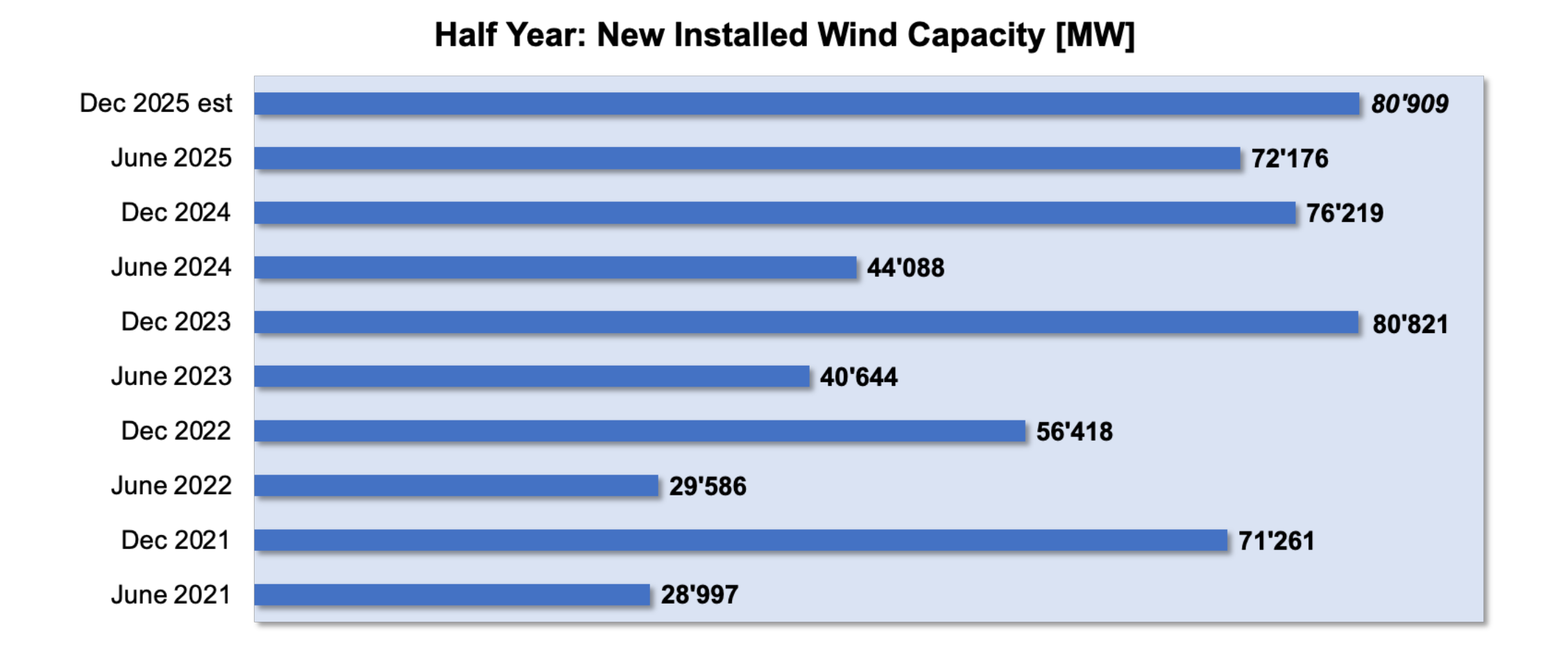
Half-Year: Newly Installed Capacity (MW)
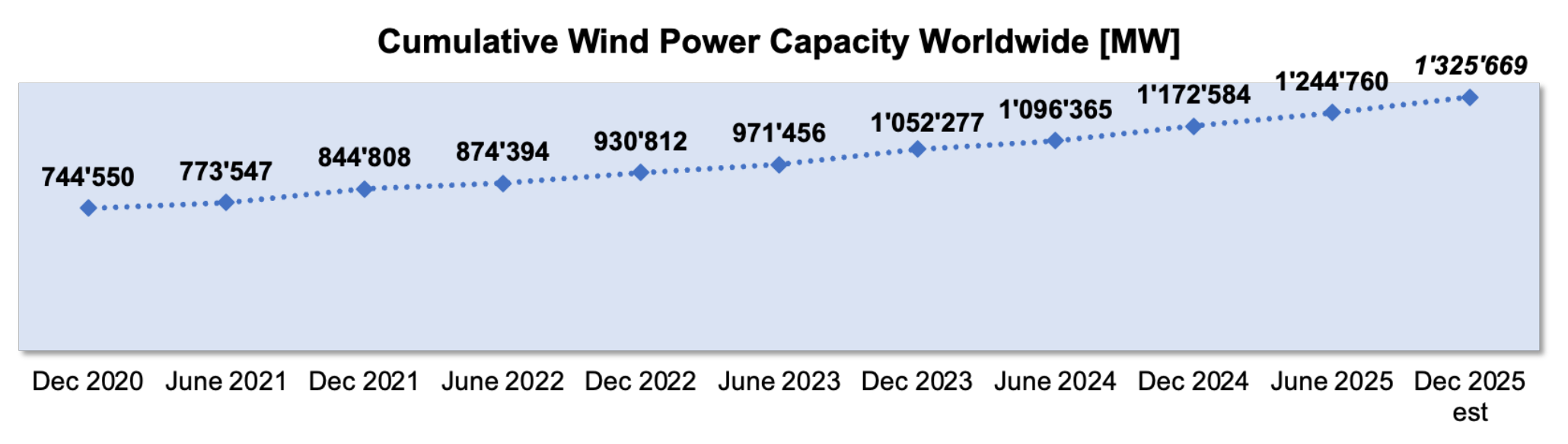
Global Cumulative Installed Wind Power Capacity (MW)
Over a longer period, the cumulative new global wind power capacity installed during the 12 months from July 2024 to June 2025 reached 148GW, marking an 18.4% increase compared to the 125GW installed in the preceding 12 months. By the end of June 2025, the global cumulative installed wind power capacity approached 1,245 GW, with an annual growth rate stabilizing at 13.5%. Wind power now meets approximately 12% of the world's electricity demand, establishing itself as a core pillar within the renewable energy system.
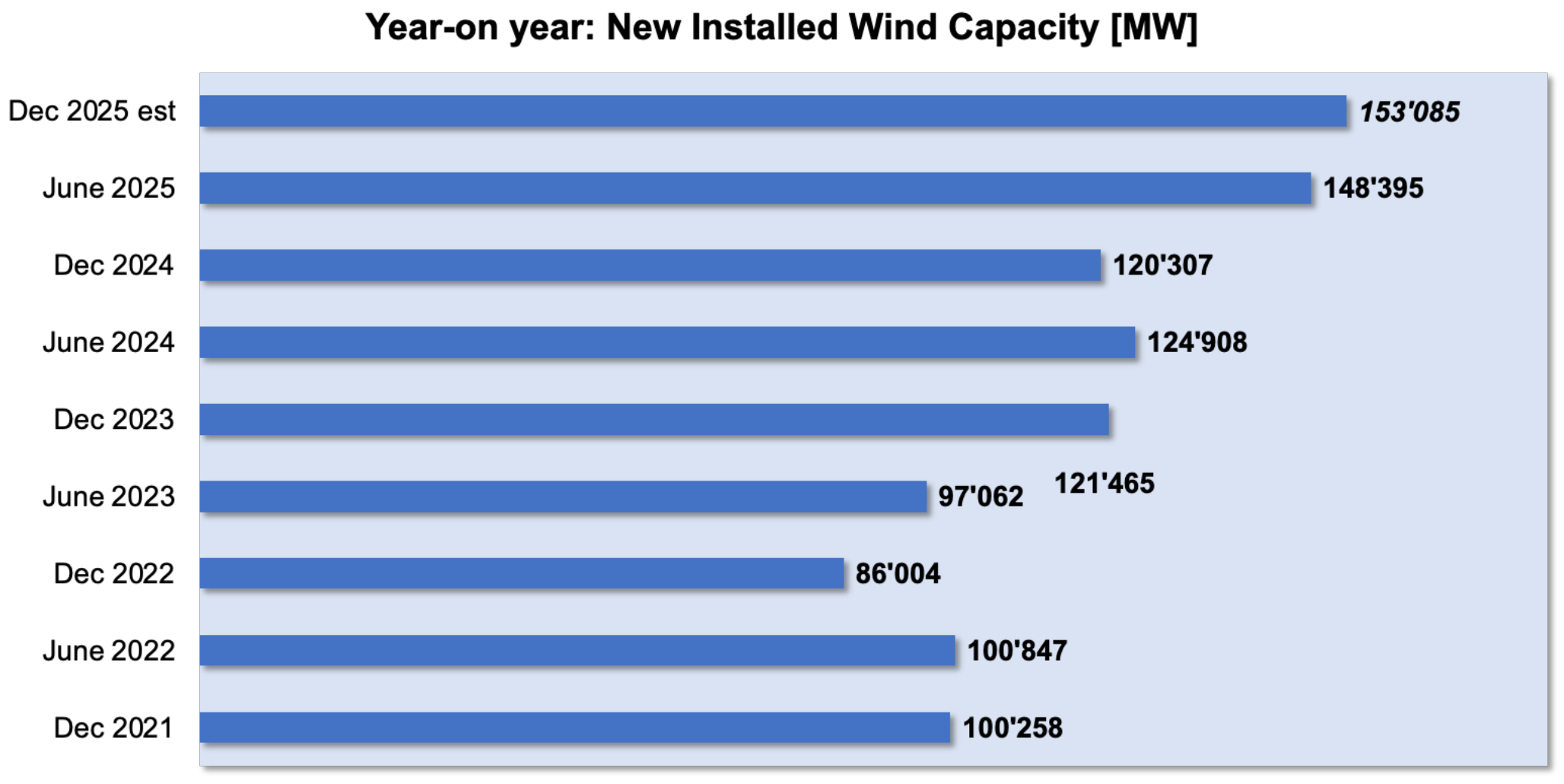
in the same proportion Newly installed capacity (MW)
Even more promising is the World Wind Energy Association's (WWEA) projection that global annual wind power installations will reach a historic peak of 150GW in 2025, significantly surpassing the 120GW recorded in 2024 and the 121GW achieved in 2023. By the end of 2025, the global cumulative installed wind power capacity is expected to exceed 1,320GW, further cementing its pivotal role in the energy transition.
II. Market Landscape Shifts
Amid the global surge in wind power growth, the market landscape is characterized by “leading players taking the lead while multiple sectors flourish”:
1. China remains firmly in first place globally, contributing over 70% of the new growth.
China remains the “ballast stone” of the global wind power market. In the first half of 2025, its newly installed capacity reached 51.4 GW, accounting for 72% of the global total and maintaining its absolute leadership worldwide.
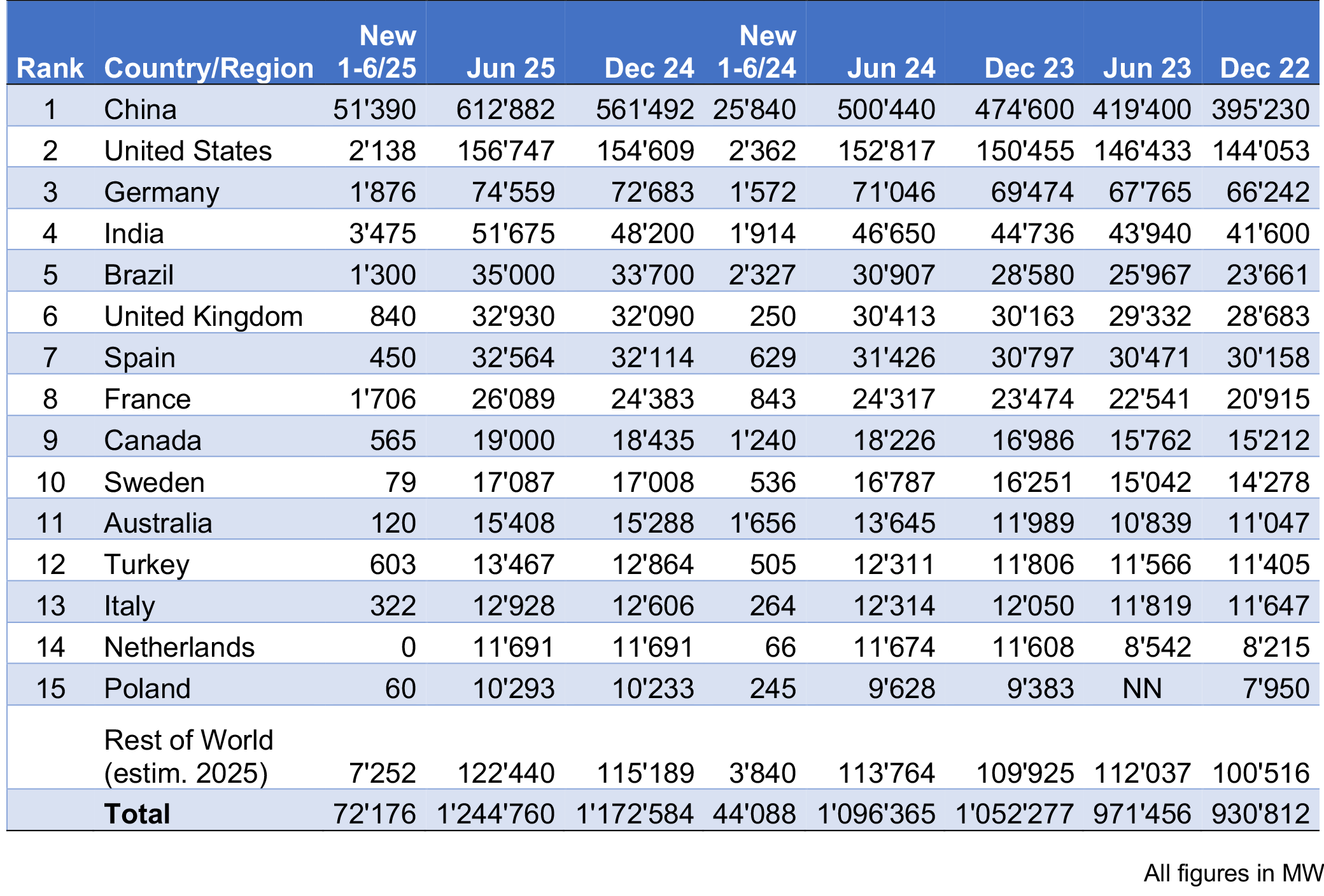
Top 15 Wind Power Markets Worldwide
2. Multiple countries surpass 1GW, with emerging markets delivering standout performance
In addition to China, multiple countries added over 1GW of new installed capacity in the first half of the year, forming a crucial tier in global wind power growth:
India ranked second with 3.5 GW, maintaining steady growth;
The United States added 2.1 GW, while Germany added 1.9 GW, continuing their growth momentum as traditional wind power powerhouses.
France (1.7 GW) and Brazil (1.3 GW) followed closely behind, emerging as the primary drivers of regional market growth.
3. The Top 15 Global Players Undergo a Major Reshuffle
Significant shifts have occurred in the rankings of the world's top 15 wind power markets: Brazil has solidified its position as the fifth-largest market globally, Spain has advanced to seventh place, and Turkey has successfully overtaken Italy to become the eleventh-largest market. The rise of emerging markets is reshaping the global competitive landscape of wind power.
III. What Drives Growth?
The robust growth in global wind power this year stems primarily from two key factors: On one hand, wind power projects delayed at the end of 2024 were completed in a concentrated manner, creating a catch-up effect. On the other hand, under existing renewable energy support frameworks worldwide, wind power investments have continued to increase, providing stable support for industry growth.
Looking ahead, wind power—as a mature, cost-effective clean energy source—will maintain its rapid growth trajectory. The expansion of offshore wind and large-megawatt turbines, coupled with the unlocking of potential in emerging markets, will serve as the core drivers of global wind power growth in the next phase.
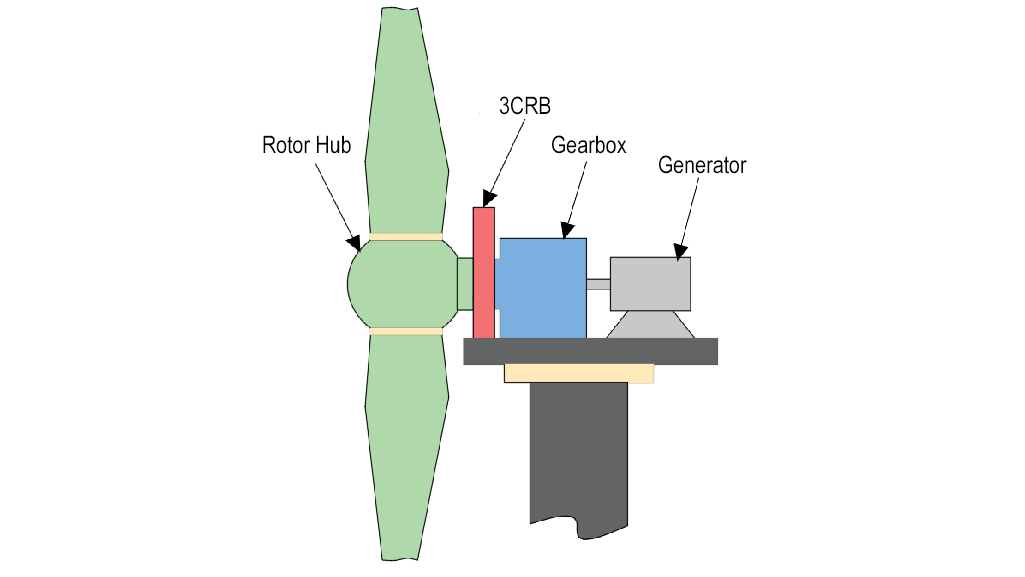
HKW Three-Row Cylindrical Main Bearing Compact Drive Chain Structure
The advancement of the wind power industry relies heavily on the reliable support of core components. HKW, a European leader in wind turbine bearing technology originating from Germany with over a century of expertise, has introduced a compact transmission chain solution featuring a three-row cylindrical roller slewing bearing as the main bearing. This new solution not only resolves load challenges through the high load-bearing capacity of three-row main bearings but also achieves over 50% weight reduction in the transmission chain. Its compact structure accommodates nacelle space constraints, precisely meeting the core requirements of large wind turbines: high efficiency, weight reduction, and space savings. Leveraging its expertise in triple-row main bearing technology, HKW has consistently provided tailored support for wind power projects worldwide, driving the large-scale development of the global wind energy industry.
Conclusion
The explosive growth in the first half of 2025 underscores the robust resilience of the global wind power industry. Against the backdrop of the energy transition, wind power is accelerating its shift from a supplementary energy source to a primary power generator. China's sustained leadership, coordinated growth across multiple markets, and continuous upgrades in core component technologies will collectively propel the global wind power industry to new heights.