The Financial Times reported, citing anonymous sources, that U.S. activist investor Ananym Capital has increased its stake in Siemens Energy. Subsequently, the hedge fund formally launched an activist campaign.
Ananym Capital's core demand is to urge Siemens Energy to conduct a strategic review of its wind power business segment. The key focus of this review is the spin-off of Siemens Gamesa.
In a letter to the Siemens Energy board, Ananym Capital stated that spinning off Siemens Gamesa could boost the parent company's stock price by approximately 40% while unlocking the true value of the business that has been obscured.
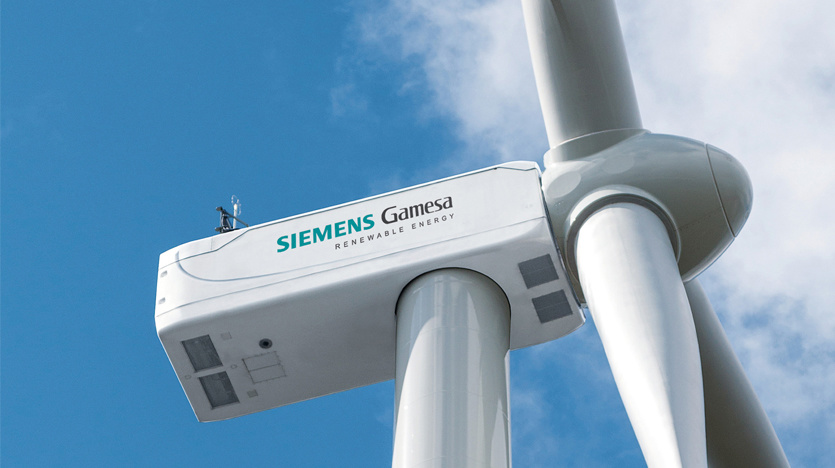
Siemens Gamesa is a globally renowned manufacturer of wind turbine systems. Currently, it is facing severe operational pressures. For the fiscal year 2024-2025 (ending September 30), Siemens Gamesa recorded an operating loss of €1.36 billion. This persistent drag on performance has already impacted the overall development of Siemens Energy.
Siemens Energy was spun off from the Siemens Group in 2020. Following the separation, it acquired a majority stake in Siemens Gamesa. In 2022, to consolidate operations, Siemens Energy launched a tender offer to achieve full ownership of Siemens Gamesa. Yet in less than three years, the company's ongoing operational challenges remain fundamentally unresolved. This has even forced the parent company to seek assistance from the German government to sustain its order volume.
Ananym Capital noted in its letter that Siemens Energy's gas turbine and grid businesses are thriving due to the massive power consumption of artificial intelligence data centers. However, the underperforming wind power business is holding back the growth of these two key segments.
Following the spin-off, Siemens Gamesa will no longer need to compete with other divisions for R&D resources, enabling greater focus on optimizing its core business. Simultaneously, it is expected to attract a cohort of professional investors focused on the long-term prospects of the wind power industry. According to Ananym Capital's projections, the post-spin-off Siemens Gamesa could achieve a valuation of up to €10 billion within two years.
Ananym Capital, the initiator of this shareholder activism campaign, was co-founded by Charlie Penner. He possesses extensive experience in successful shareholder activism. In 2021, Penner led Engine No.1's proxy fight against ExxonMobil with a minority stake. Ultimately, he secured a board seat for the fund and drove strategic changes at ExxonMobil. Additionally, Penner has spearheaded shareholder challenges against prominent companies including Apple and McDonald's.
Although Ananym Capital did not disclose the specific size of its stake this time, it explicitly stated that this was a “significant holding,” clearly demonstrating its determination to push for the spin-off.
Previously, investors had called for Siemens Energy to spin off its wind power business. However, the company responded that it had already established a clear improvement plan for the wind power division. According to the plan, Siemens Gamesa is projected to achieve profitability by 2026.
Currently, all parties are closely monitoring Siemens Energy's next move to see whether it will initiate a strategic review of Siemens Gamesa. This spin-off controversy may have far-reaching implications for the global wind power industry landscape.
Founded in 1921, Germany's HKW has specialized in wind turbine bearings since 1985, accumulating technological expertise throughout the industry's evolution. Its three-row cylindrical main bearing technology consistently ranks among Europe's top three. Leveraging triple technological expertise in structure, materials, and manufacturing processes, HKW's three-row cylindrical main bearings deliver six core advantages: exceptional reliability, high load capacity, superior structural rigidity, high transmission efficiency, easy installation, and low total cost of ownership. Whether deployed in onshore wind farms or confronting salt spray corrosion and extreme wave conditions in offshore environments, HKW's three-row cylindrical main bearings significantly reduce turbine downtime and maintenance frequency, delivering efficient performance across all operational scenarios. Deeply rooted in the wind power supply chain, HKW leverages its global localized service network to serve partners worldwide with cutting-edge technology and premium products.