Spanish developer OPDEnergy faces a hefty €4 million fine after its La Estrella wind farm in central Chile was found to be linked to the deaths of four vultures.

Image Source:Jaime Grajales Benjumea
Chile's environmental regulator SMA has charged that since the wind farm began operations in 2021, four vultures have been found dead in the surrounding area. OPDEnergy failed to implement two critical bird protection measures: it did not apply bird-visible color bands to the turbine blades, nor did it install a bird radar warning system. The wind farm is equipped with 11 Siemens Gamesa SG 4.5-145 turbines.
Mainstream Bird Protection Measures for Wind Farms
Blade painting with color bands (such as black or black-and-white contrasting colors) is a widely adopted bird protection measure in the wind power industry. Its core principle involves enhancing the visual distinctiveness of blades to reduce bird collision risks. Practical implementation at Norway's Smøla wind farm demonstrated that painting one-third of the blades black resulted in a significant 70% reduction in bird mortality, validating the effectiveness of this approach.
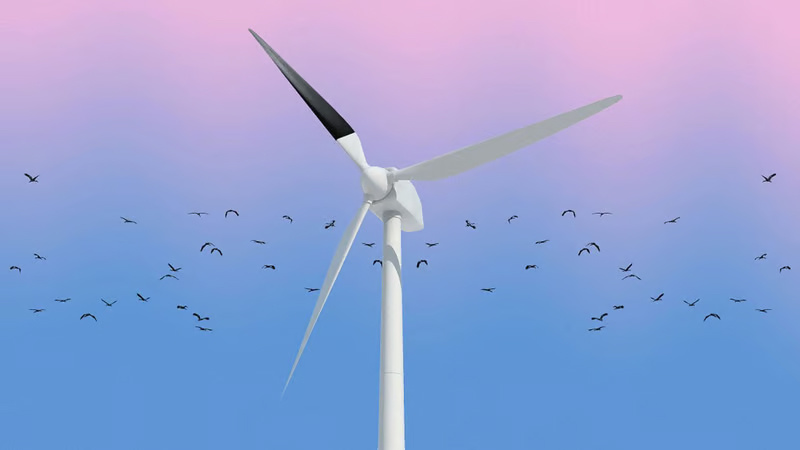
Image Source:iStock
Beyond blade coating, the industry has developed multiple proven bird protection solutions:
Install bird deterrent devices, such as ultrasonic emitters and reflective strips, to actively prevent birds from approaching.
Dynamically adjust operational strategies to reduce turbine speeds during bird migration seasons or peak foraging periods;
Optimize site selection at the source, avoiding ecologically sensitive areas such as bird habitats and migration routes;
Upgraded blade design incorporates serrated trailing edges and low-noise airfoils to reduce attraction to birds.
Global Policy Landscape
Currently, no unified or universally applicable mandatory standards requiring the painting of color bands on wind turbine blades have been established globally. Relevant measures are primarily adopted voluntarily by companies or implemented as targeted regulations in specific areas, such as around airports or bird sanctuaries.
International Standard: No mandatory requirement for blade coating color bands
The International Civil Aviation Organization (ICAO) Annex 14: Aerodromes standard requires wind farms to maintain a safe distance from airports or implement identification measures such as aviation obstruction lights and red-painted blade tips.
Primary Countries/Regions: No national mandatory regulations; regional guidance is the primary approach.
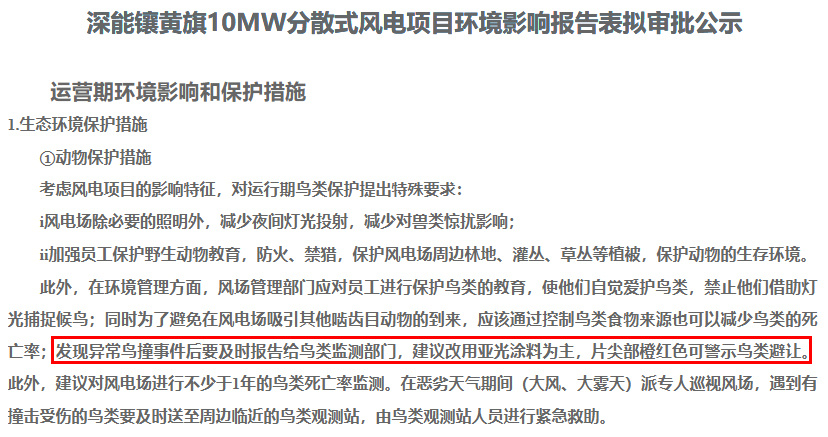
China: No Mandatory Requirements, but Bird Protection Guidance Exists. As a major wind power producer, China currently has no national-level laws or regulations mandating the application of color bands on wind turbine blades. However, some provinces, autonomous regions, and municipalities (such as Inner Mongolia and Xinjiang) recommend that companies implement bird protection measures (e.g., applying contrasting colors to blades, installing bird deterrent devices) during environmental impact assessments for wind power projects to reduce bird collision risks.
EU: Draft Focuses on Environmental Sustainability but Does Not Mandate Color Bands. The EU's 2025 draft implementing rules for Regulation (EU) 2024/1735 (regarding public procurement for solar, onshore wind, and offshore renewable energy) emphasizes “environmental sustainability” but does not explicitly require blades to be painted with color bands. The core requirements of the draft are “resilience throughout the entire life cycle” (e.g., photovoltaic modules withstanding extreme temperatures and humidity, wind power equipment resisting sand and dust erosion) and “minimizing impacts on wildlife” (e.g., locating wind farms away from bird habitats), but it does not mandate color bands.
Additionally, the EU Birds Directive (2009/147/EC) mandates the “protection of birds and their habitats.” Some member states, such as Germany and the Netherlands, require companies to submit “bird impact assessment reports” during wind power project approvals and implement measures like blade painting and adjusting operating hours. However, these are project-level requirements rather than national mandates.
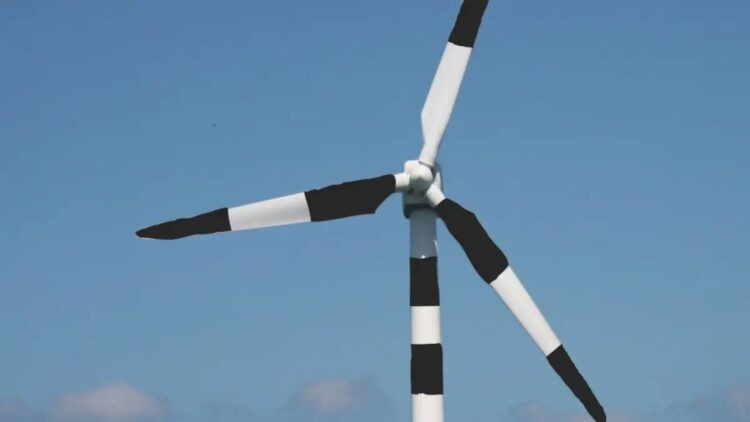
Image Source:New Scientist
United States: No federal mandate; flexible state/local regulations apply. There is no federal mandate for blade striping in the United States. However, certain states (e.g.California, Texas) may require companies to apply blade striping (e.g.black) or install active bird deterrents for bird protection (e.g.California condor, Texas pelican) or airport safety (e.g.wind farms near Los Angeles International Airport). For example, the California Energy Commission (CEC)'s Wind Energy Project Bird Protection Guidelines recommend “applying contrasting colors to blades to reduce bird collision risks.”
Other major countries: No mandatory requirements. The National Building Code of Canada (NBC) mandates safe distances between wind farms and airports but does not mandate color bands. The Australian Environmental Management Guide for Wind Farms requires “reducing impacts on birds” but does not mandate color bands. Brazil's Environmental Impact Assessment Regulation for Wind Power Projects requires “assessing bird collision risks” but does not mandate color bands. India's Guidelines for Wind Power Projects require “site selection avoiding bird sanctuaries” but do not mandate color bands.

Image Source:The Diary 24 in-house edition
Europe has consistently been at the forefront of global wind power technology exploration, with its innovative practices and technological advancements profoundly shaping the industry's trajectory. The classic bird protection solution of color-banded wind turbine blades exemplifies Europe's technological exploration, tracing its origins to the pioneering 2013 experiment at Norway's Smøla wind farm. Europe's leadership in wind power also relies heavily on core component support, with Germany's century-old brand HKW playing a pivotal role through its three-row cylindrical main bearing technology—consistently ranked among Europe's top three in technical prowess.
German HKW three-row cylindrical main bearings leverage triple technological expertise in structure, materials, and manufacturing processes to deliver six core advantages: high reliability, strong load-bearing capacity, robust structural rigidity, high transmission efficiency, easy installation, and low overall cost. Whether deployed in onshore wind farms or confronting salt spray corrosion and extreme wave conditions in offshore environments, the HKW three-row cylindrical main bearing significantly reduces turbine downtime and maintenance frequency, delivering efficient performance across all operational scenarios. HKW remains deeply committed to the wind power equipment market, leveraging its global localized service network to provide cutting-edge technology and premium products to partners worldwide.