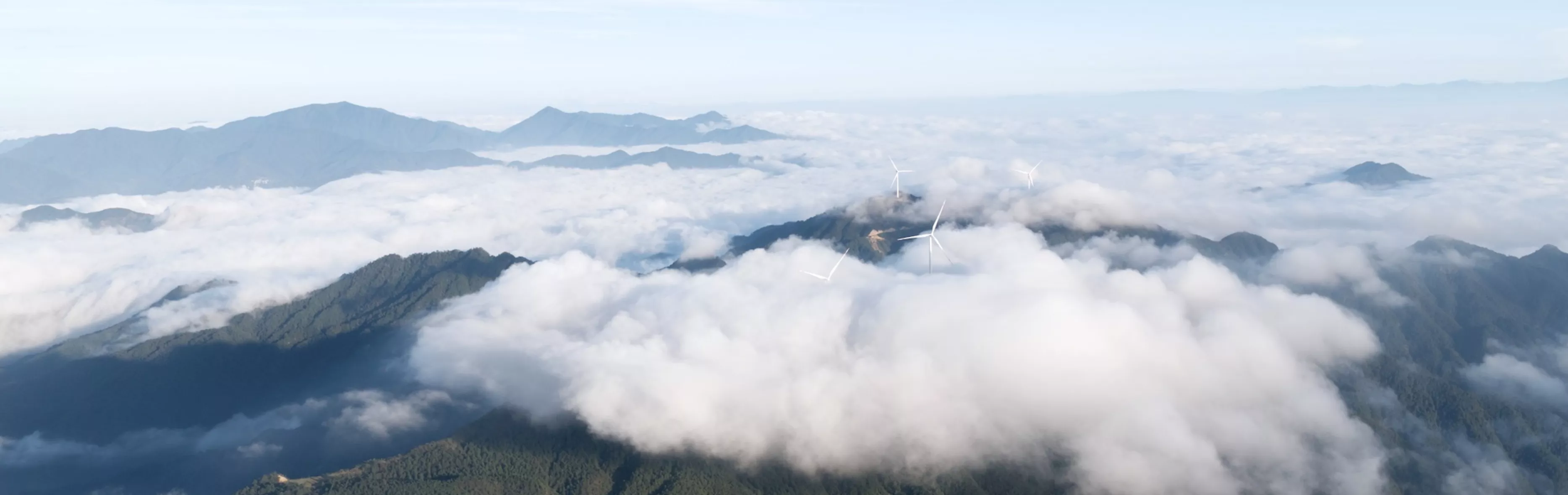
Recently, the South Korean government officially released the“Offshore Wind Power Infrastructure Expansion and Deployment Plan,”clearly outlining phased development blueprints for 2030 and 2035 to fully seize the high ground in the global offshore wind power market.
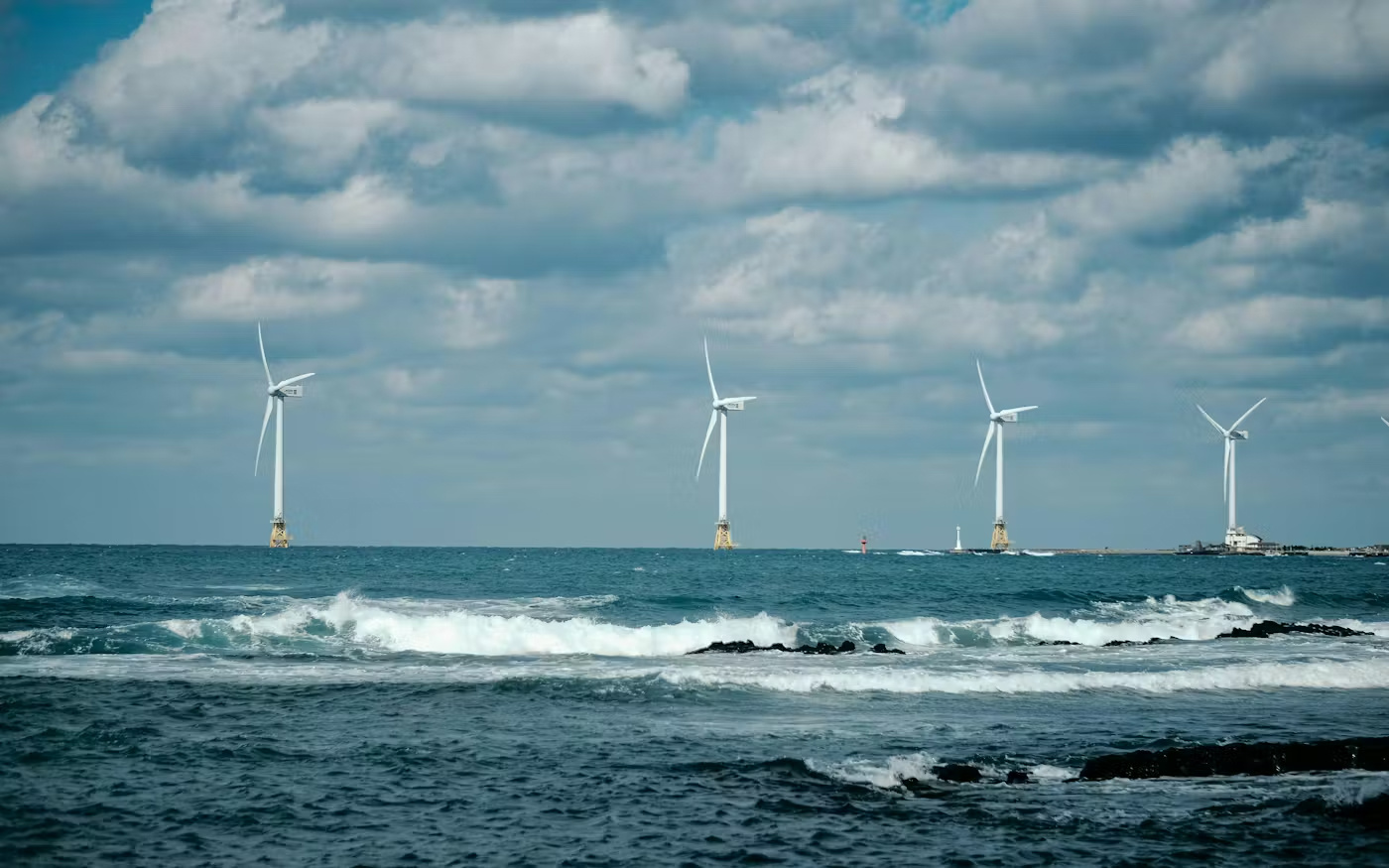
Offshore wind farm near Jeju Island, South Korea. Image credit: Insung Yoon on Unsplash
According to the plan, South Korea has set two core objectives: In terms of scale, it aims to establish an offshore wind power generation system with an annual capacity of 4GW by 2030, with a cumulative total of 10.5GW of projects under construction or planned. By 2035, the cumulative installed capacity is projected to exceed 25GW. Regarding costs, the target is to reduce the power generation cost to 250 won per kilowatt-hour by 2030, further decreasing to 150 won per kilowatt-hour by 2035.
South Korea's current annual commercial operation capacity for offshore wind power stands at a mere 0.35 GW, primarily constrained by practical challenges such as inadequate supporting infrastructure and cumbersome approval processes. To break through these barriers, the South Korean government has identified three core advancement measures:
First, improve infrastructure. By 2030, construct at least four 15MW-class installation vessels and multiple supporting ports, while coordinating with financial funds to provide capital and guarantee support.
Second, reform the approval mechanism. Improve the consultation process for military-related projects, complete military reviews for bidding projects in advance, and increase the effective bid ratio to 2:1 or higher to stimulate market vitality.
Third, enhance implementation efficiency. Establish an “Offshore Wind Power Development Promotion Team”ahead of schedule within the year to provide full-process coordination services and shorten the project cycle for offshore wind power initiatives.
Technology R&D becomes a strategic core pillar: South Korea will focus on developing domestically produced 20MW-class wind turbines and constructing a 100MW floating wind power demonstration project. In the medium to long term, it will further reduce costs and strengthen industrial competitiveness through measures such as building energy hubs and optimizing bidding systems.
Founded in 1921, Germany's HKW has specialized in wind turbine bearings since 1985, accumulating technological expertise throughout the industry's evolution. Its three-row cylindrical main bearing technology consistently ranks among Europe's top three. Leveraging triple technological expertise in structure, materials, and manufacturing processes, HKW's three-row cylindrical main bearings deliver six core advantages: high reliability, strong load-bearing capacity, enhanced structural rigidity, superior transmission efficiency, easy installation, and low overall cost. Whether deployed in onshore wind farms or confronting salt spray corrosion and extreme wave conditions in offshore environments, HKW's three-row cylindrical main bearings significantly reduce turbine downtime and maintenance frequency, delivering efficient performance across all operational scenarios. Deeply rooted in the wind power supply chain, HKW leverages its global localized service network to serve partners worldwide with cutting-edge technology and premium products.